Every winter the same thing happens. The air turns cold, the heating goes on, and within a couple of weeks your hands feel tight, look dull and start to crack at the knuckles. Hands are often the first place dry weather shows, and the last place we think to look after.
Why hands get so dry in winter
Cold, dry air. Low humidity pulls water out of the skin faster than it can be replaced.
Indoor heating. Central heating dries the air even further, so hands lose moisture indoors too.
Frequent washing and sanitizing. Winter is cold and flu season, so we wash and sanitize more. Harsh soaps and plain alcohol gels strip the natural oils that protect the skin.
Fewer oil glands. The backs of the hands have far fewer oil glands than the face, so they have less natural protection to begin with.
A simple winter hand care routine
1. Wash gently
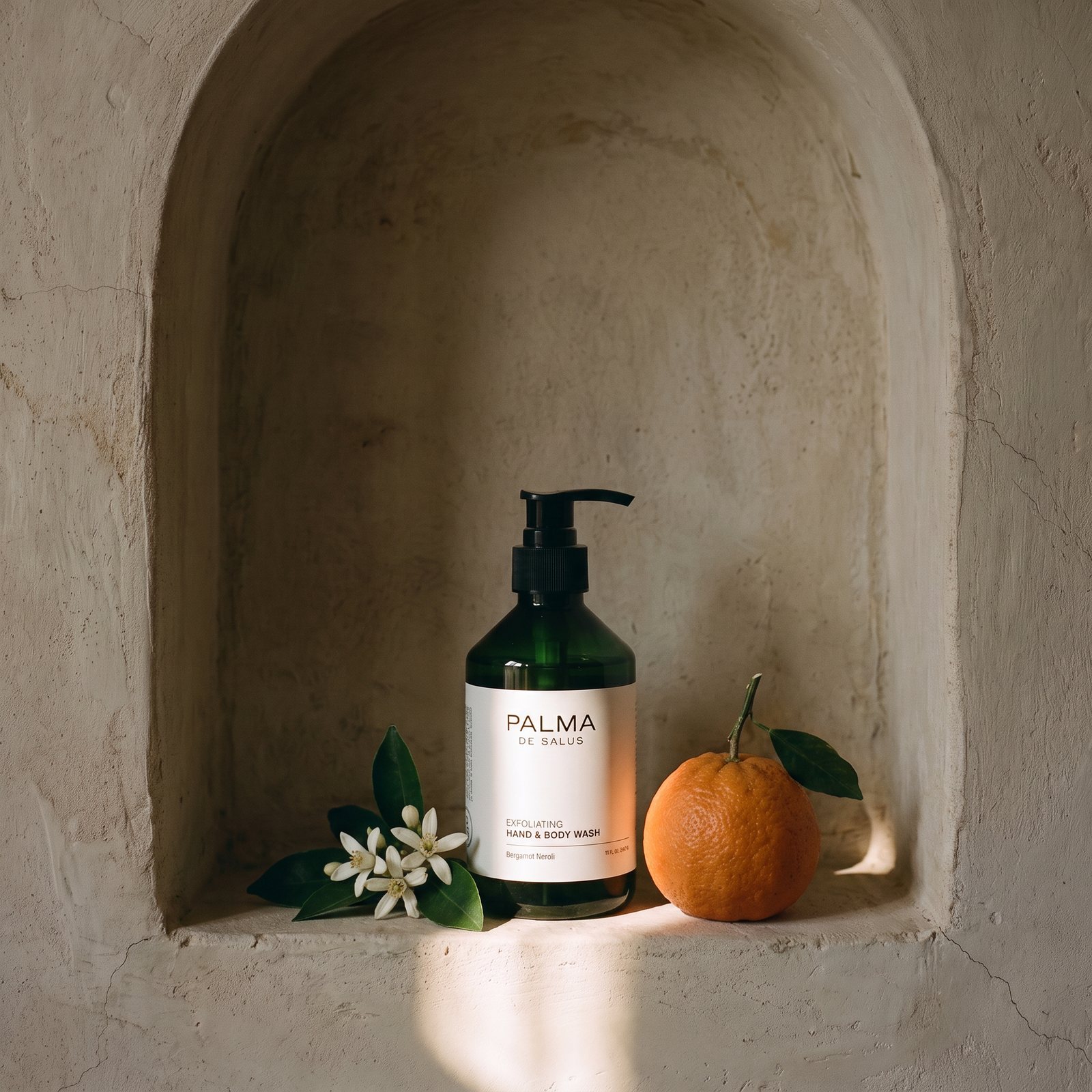
Switch to a sulfate-free hand wash that cleans without stripping. Use lukewarm water rather than hot, and pat your hands dry instead of rubbing. Our Exfoliating Hand & Body Wash uses coconut- and apple-derived cleansers with betaine and avocado oil, so hands feel conditioned rather than tight after washing.
2. Exfoliate once or twice a week
Dry winter skin builds up a dull, rough surface layer that stops moisture from soaking in. Gentle exfoliation lifts it away. Look for a fine, natural exfoliant rather than large, scratchy particles. The Palma wash uses upcycled olive seed powder, a byproduct of olive oil production, so you can exfoliate as part of a normal hand wash.
3. Hydrate every time you sanitize
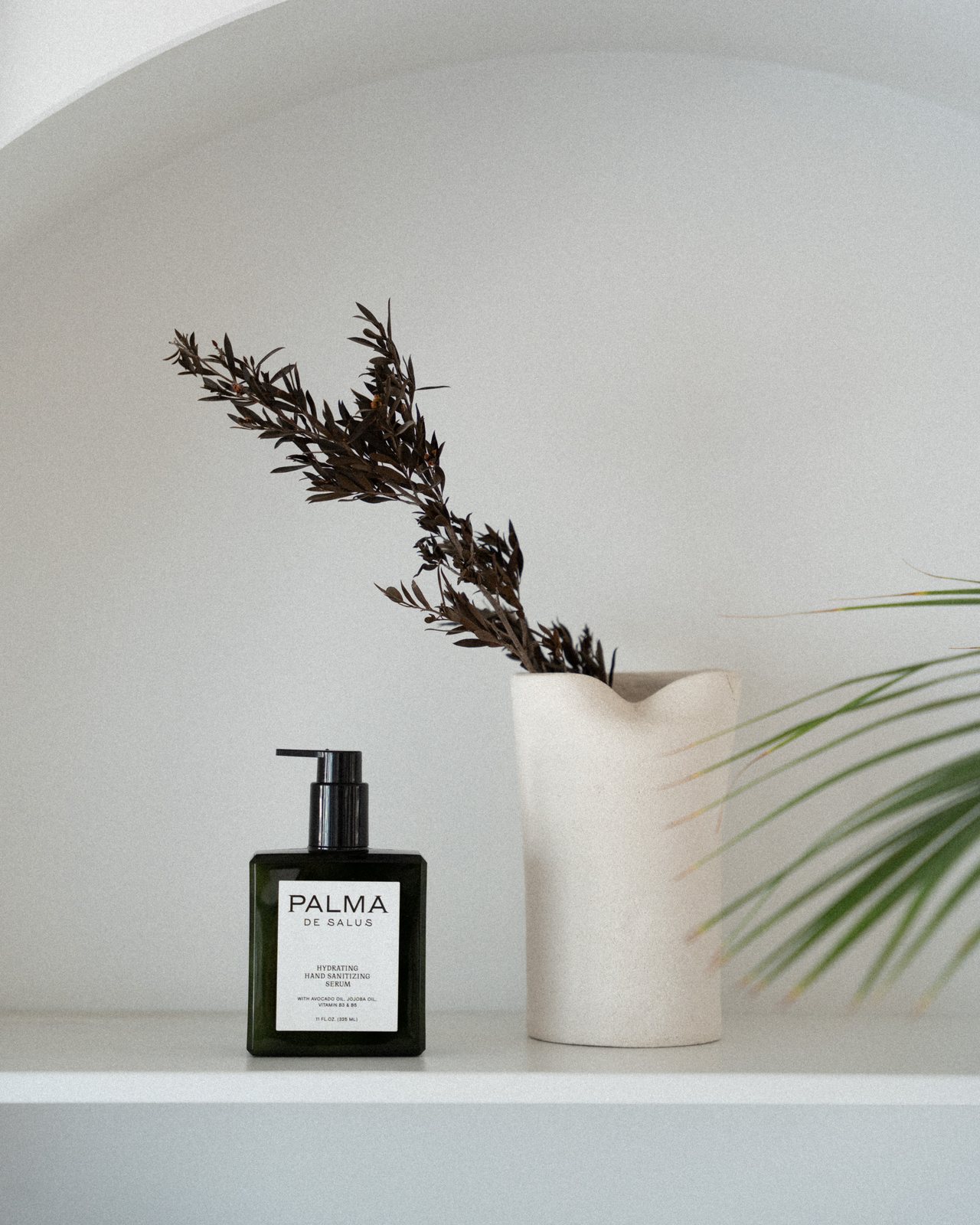
Plain alcohol gels are one of the biggest causes of winter hand dryness. Swap yours for a sanitizer that conditions as it cleans. The Hydrating Hand Sanitizing Serum pairs 70% ethanol with avocado and jojoba oils, hyaluronic acid and vitamins B3, B5 and E, so every use adds moisture back instead of taking it away.
4. Protect your hands outdoors
Wear gloves in cold wind, and gloves for washing up. Water and cold together are especially hard on skin.
5. Look after cuticles and knuckles
These areas crack first. Massage in a little extra conditioning product at night, and avoid picking at dry skin around the nails.
When to see a professional
If your hands are painful, bleeding, very inflamed or not improving after a few weeks of gentle care, see a doctor or dermatologist. Persistent cracking can be a sign of a skin condition that needs specific treatment.
The routine at a glance
- Every wash: gentle, sulfate-free cleanser, lukewarm water, pat dry
- Every time you sanitize: a sanitizer that hydrates
- Once or twice a week: gentle exfoliation
- Outdoors: gloves
Made by hand in small batches. Explore the full collection.